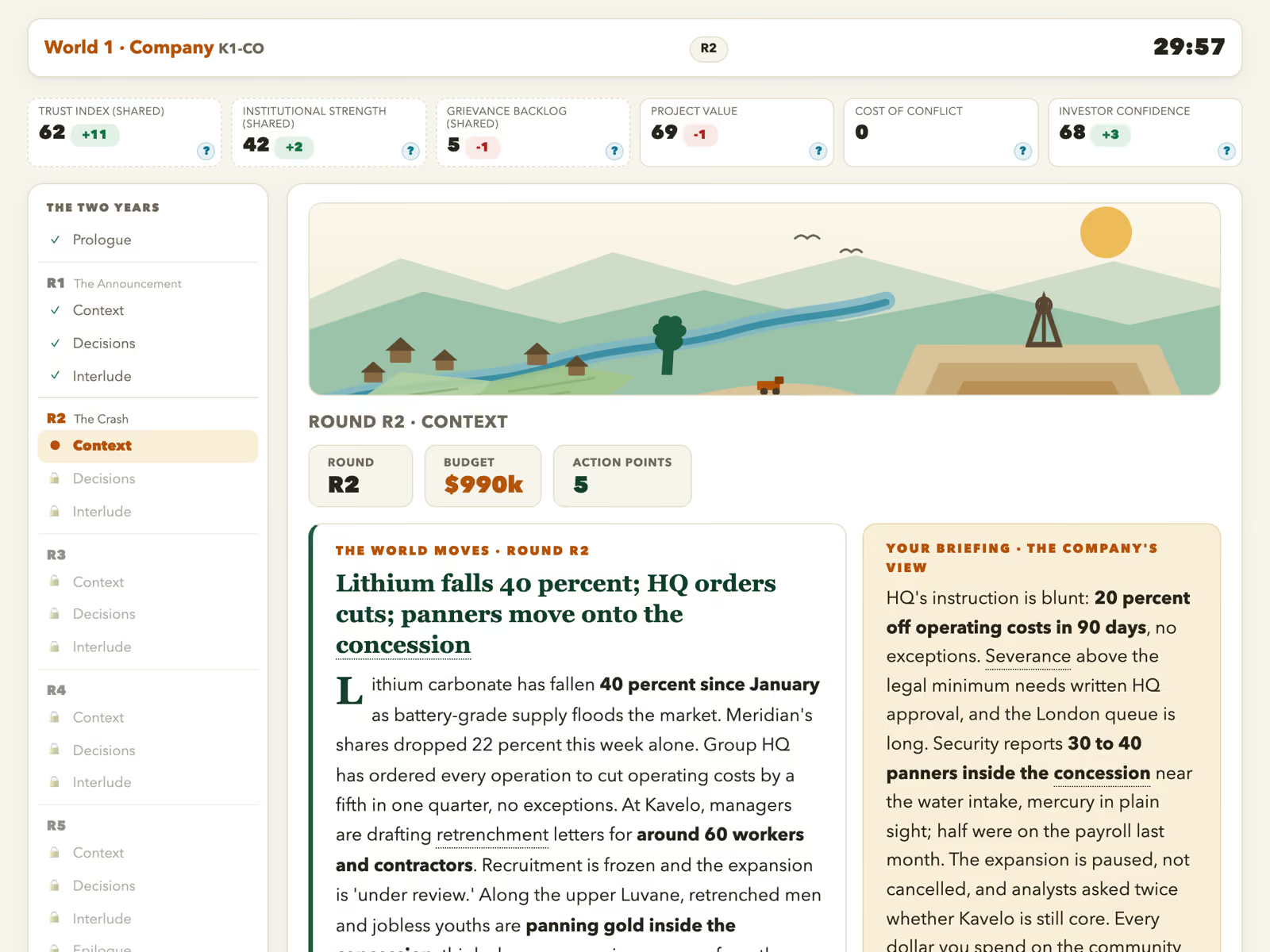
The room splits into three or four parallel worlds. Each world pairs one community table with one company table, five to seven players each. The paired tables share a single game state: one trust index, one grievance backlog, one river. They do not sit together and they do not negotiate face to face in ordinary rounds.
That is the design, not a limitation. They experience each other the way real counterparts mostly do, through observed actions and their consequences, and they find out what the other side was thinking only at the debrief.
The scenario is the Kavelo Lithium Project in the Republic of Malunda, a fictional composite built from projects I have worked on. Meridian Lithium plc, London-listed, three years into production on an 850 million dollar NPV. On the other side of the fence line, the Nkosi Valley: about 6,000 people across three villages, living from maize, cattle and the Luvane River.
Every event in it has happened somewhere, more than once. None of them at any single identifiable project, which is what lets everyone in the room play honestly.