
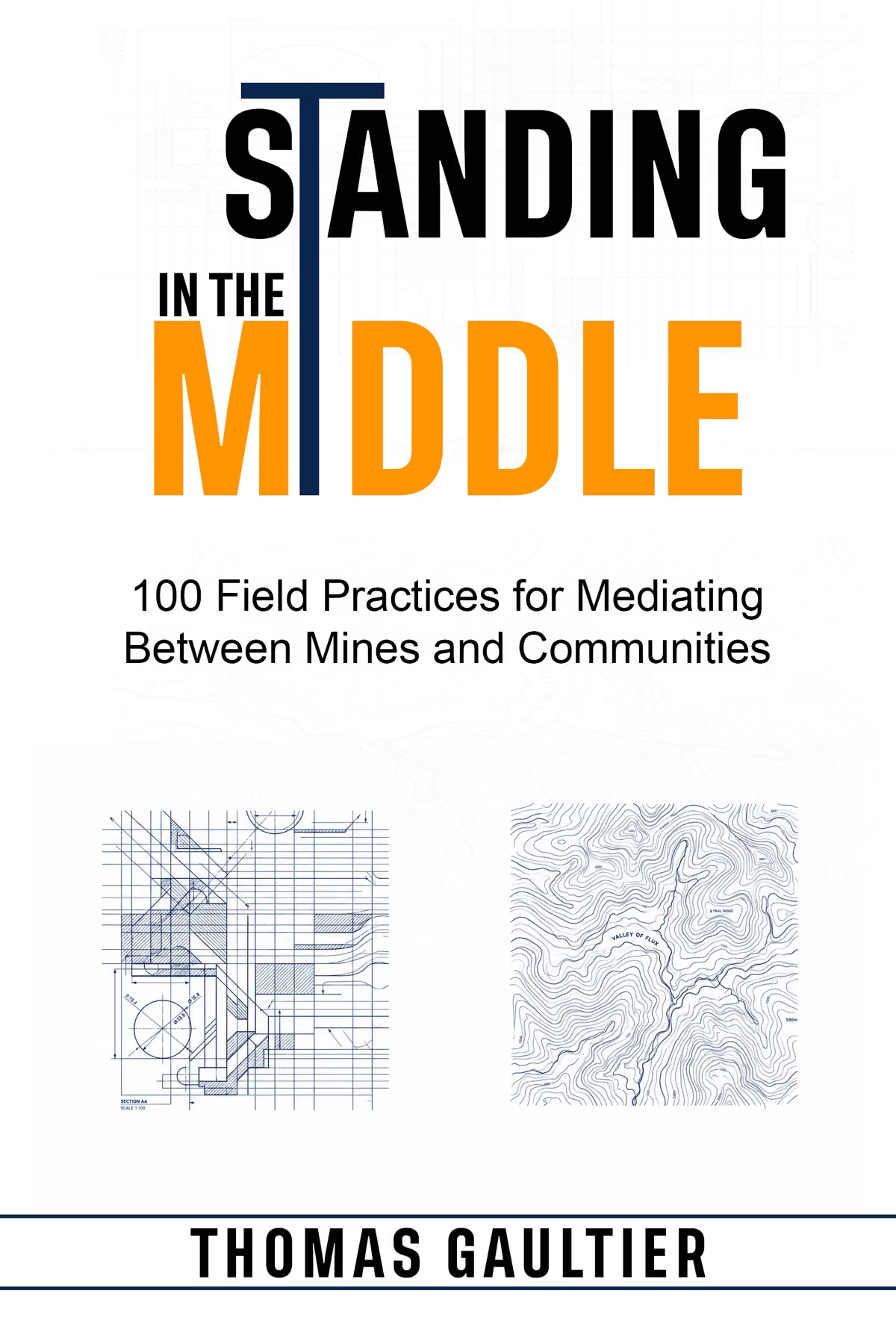
The field companion of the library
Standing in the Middle
100 Field Practices for Mediating Between Mines and Communities
In one week, a mediator was accused twice. On Tuesday a country manager said he had gone native. On Friday a community leader pointed at him in an assembly and called him the company’s man. Both were certain. Both were wrong. That is the job.
If you work in the space between an industrial project and the people who live where it operates, you know that place. The company expects you to keep the project moving. The community expects you to protect what matters to them. Both expectations are legitimate, both are partly opposed, and you are the human point where they meet.
This book hands you one hundred practical moves for that position, drawn from two decades of fieldwork and thousands of grievances, negotiations and difficult rooms. Not theory, not frameworks: each practice is one page, and each closes with a single boxed line, marked In the field, that distills the move into something you can carry into the room.
The discomfort of the middle is not your failure. It is the job.
Contents
What is inside
- 01
Communication and facilitation
Listen so people tell you the truth, speak so they actually understand you, and run a room so it goes somewhere.
- 02
Interest and need management
Find what really moves people beneath what they demand, surface the voices that carry risk when ignored, and turn a felt need into a term you can negotiate.
- 03
Process management
Design a presence that earns trust, manage the company side, work with government, deliver hard news without losing the room, and hand the work over well.
- 04
De-escalation
Cool a room in real time, manage rumor, handle the flashpoints of extractive work, and regulate the one instrument you cannot replace, yourself.
- 05
Accountability and transparency
Track commitments, run grievances people believe in, keep institutional memory, and make trust a structure people can inspect.
- 06
For the day it boils over
A Practitioner’s Quick Index lists all one hundred practices on a few pages, and the Crisis Pages point you to the handful that matter most when a protest has started or you have bad news to deliver in person.
Who it is for
- Community liaison and social performance officers
- Community relations advisers, grievance and resettlement leads
- Mediators working the company-community interface
- Consultants, NGO field staff and government liaisons
The opening chapter
Read it before you buy it
Chapter one, in full, as a PDF. Give me an address and it arrives as a link you can open on any device. I send the chapter and nothing else unless you ask for it on the second box.
If the relationship around a project is under pressure, or heading there, let us talk.
A 30-minute call is enough for me to understand the situation and tell you honestly whether I can help. Active opposition, a social license problem, an FPIC process that needs an independent facilitator, a negotiation a community has to prepare for, or a conflict that is not public yet but will be. It makes no difference which side of the table you are on. No obligation, no generalist pitch.
Every first conversation is confidential.